The 2000 Cricket code

A summary of the main changes to the Cricket Laws (effective for the 2001 domestic season):

The Preamble – the spirit of cricket Cricket should be played not only within its Laws but also within the Spirit of the Game, which involves respect for your opponents, your captain and team, the role of the umpire and the game's traditional values. It is against the Spirit of the Game to dispute an umpire's decision by word, action or gesture, to direct abusive language towards an opponent or umpire, to indulge in any sharp practices for instance to appeal knowing that a batsman is not out, to advance towards an umpire in an aggressive manner when appealing, to distract an opponent either verbally, or by action etc.

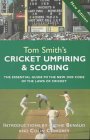
Read: Tom Smith's 'Cricket Umpiring & Scoring' - the essential guide to the New 2000 Code of the Laws of Cricket (ISBN 0297646044), available from http://www.amazon.co.uk and all good bookshops.
 
see also: MCC section of http://www.ecb.co.uk for details of the new Laws.
  Cricket Umpiring and Scoring Buy the new guide book online from http://www.amazon.co.uk

One run penalty for a no ball shall be scored as a no ball extra even if the batsman is dismissed. Any runs completed by the batsman or a boundary allowance shall be credited to the striker if the bat has struck the ball otherwise they shall also be scored as no ball extras. All such runs debited against the bowler.
 
Penalty Runs
Penalty runs may be awarded for penalties under a number of laws and will have to be recorded separately. During an innings, penalty runs may be awarded as penalty extras to both the batting and the fielding side during an innings depending upon whom incurred the penalty. Any penalty runs awarded in respect of no balls and wides will be debited to the bowler.


A catch is valid if the ball is caught off an obstruction (e.g. a tree) within the boundary, provided it has not previously been decided to regard the obstruction as a boundary.


Fair and Unfair Play
The umpires have sole discretion over this and may intervene even if the ball is in play. Various offences for which penalty runs will be awarded are now defined.


There are now some new umpires signals
– scorers beware !!!!


No Ball  may be called in respect of dangerous and unfair bowling and deliberate bowling of high full pitched balls:
  • repetition of fast short pitched balls taking into account their length, height and direction which may cause physical injury to the striker even if wearing protective equipment plus the relative skill of the striker shall be taken into account
  • any delivery which, after pitching, passes or would have passed over head height of the striker standing upright at the crease, although not fair shall be considered as part of the repetition sequence
  • any delivery, other than a slow paced one, which passes or would have passed on the full above waist height of the striker standing upright at the crease
  • a slow delivery which passes or would have passed on the full above shoulder height of the striker standing upright at he crease

Two warning s by umpire and the bowler to be taken off for rest of innings.

If the umpire considers that a high full pitched ball that is deemed to be dangerous and unfair was deliberately bowled then the caution and warning shall be dispensed with and the bowler will be taken off forthwith for the rest of the innings.


Team to be named in writing to the umpire prior to the toss – no change to the team will be permitted after this.
 
Substitute or runner now on the OK of the umpire (not the opposing captain).
 
If a player leaves the field of play he must seek the permission of the umpire to return which is allowable during the course of an over if it doesn't delay the match. Penalty runs will be added to the batting side's total if permission isn't sought and the player handles the ball.
 
The blade of the bat must only be made of wood, e.g. no carbon fibre inserts, etc.

A ball not reaching the batsman = no-ball and dead-ball.
 
The ball must be returned to the umpire at the fall of a wicket.
 
The inside edge of a boundary line is the boundary. If part of a sightscreen is within the boundary line as may be marked, the whole of the sightscreen is considered to be outside of the boundary.

Practice
  • No bowling or batting practice is allowed on the pitch or on the area parallel and immediately adjacent to the pitch at any time on the day of the match
  • No bowling or batting practice is allowed any other part of the square on the day of the match unless it ceases no less than 30 minutes prior to the start of play or after play ceases for the day
  • If a player contravenes these criteria he shall not be allowed to bowl until his side has bowled at least 5 complete overs after the contravention
  • If an over is in progress at the contravention, the bowler shall not be allowed to complete his over and the remaining part-over will not count as part of the 5 over duration
  • There shall be no practice on the field of play during a match if the umpire considers that it could result in a waste of time and will incur penalty runs being awarded to the batting side.
 
If the batsmen run 5 runs before the ball crosses the boundary, 5 runs will be scored and the batsmen remain at the end which they have reached
Where, for example, only one run is required for a team to win the match the batsman hits the ball to the boundary and at the same time sets off for a run – if the run is completed before the ball crosses the boundary only one run will be recorded to the batsman and not the 4 [or 6].

If a bowler bowls a ball, which bounces more than twice or rolls along the ground before it reaches the popping crease, it will be deemed a no ball.
 
Only the umpires and scorers can agree the scores where there appears to be a discrepancy, not the captains.
 
If a no ball is bowled and the batsman hits it to the boundary, then the no ball is recorded as 1 no ball penalty run and the 4 [or 6] is recorded against the batsman's total = 5 runs [or 7 runs] to the batting sides total.

A ball shall be considered a wide in the opinion of the umpire if the ball
(a) passes wide of the striker where he is standing and would also have passed wide of him in a normal guard position and
(b) the striker is unable to reach to hit it with a normal cricket stroke.
A penalty of one run shall be awarded even if the batsman is dismissed.
All runs completed by the batsmen or a boundary allowance together with the penalty for the wide shall be scored as wide balls and debited against the bowler.
 
The entire batting glove is deemed to be part of the bat, e.g. any elasticated cuff, etc.: wear an armguard and tuck it into the cuff of the glove and the armguard becomes part of the glove.

Wicket Keeping Gloves
The design of the gloves is now specified but for recreational cricket such as ours, this Law does not become effective until the 2002 season since there are none/few on the market yet.


Email: cricket@raz.co.uk
Web: http://www.raz.co.uk/cricket/